How Disc Wear Actually Changes Flight (and When a Disc Is Actually Done)
Quick Answer: Impact and UV exposure make disc plastic more flexible, and repeated ground strikes wear the rim. The result is predictable: discs get more understable over time. Retire one when its flight becomes unpredictable rather than merely shifted — or when the rim shows real deformation.
Your trusty fairway driver used to hold a line. Now it turns over on shots it used to eat for breakfast, and you’ve started blaming your form.
Your form is probably fine. The plastic changed.

Why does disc plastic actually change with use?
Impact breaks down rigidity. Repeated ground strikes and general use gradually reduce the stiffness of the plastic compound. That’s a real, measurable material change, not a perception drift.
UV exposure softens plastic independently. Cumulative sun during outdoor play contributes on its own, separate from impact. A disc that lives in a car in July ages faster than its round count suggests.
Blends age at different rates. Premium and base plastic types break in and break down on meaningfully different timelines, so “a season of play” means very different things across two discs.
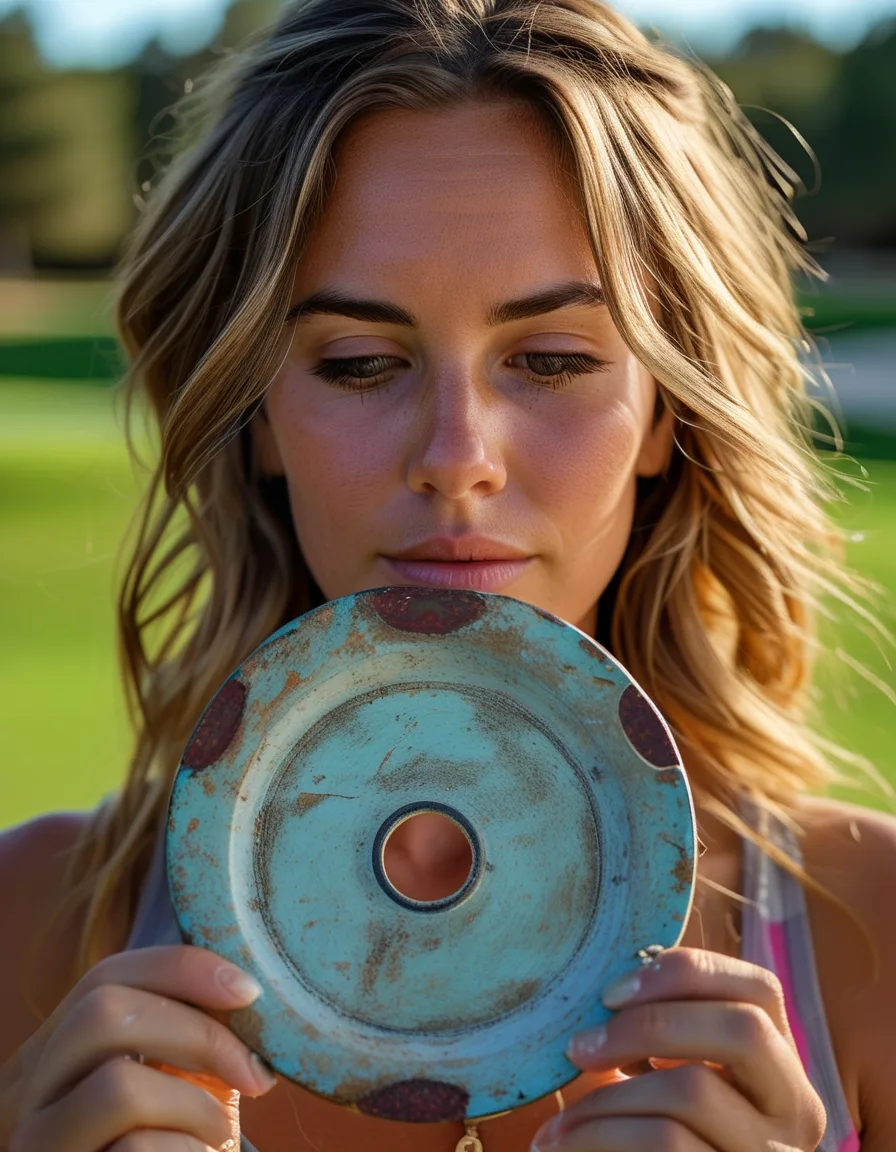
The rim takes the hit. Ground contact wears the edge specifically — the part of the disc that matters most for how it cuts through air.
Visible fading and surface texture correlate with the underlying flexibility change, though imperfectly. The colour tells you something; it doesn’t tell you everything.
How does wear change flight specifically?
- Increased understability. More flexible plastic typically turns more and fades less than it did new. This is the dominant, widely observed pattern.
- Effective stability rating drifts down. The numbers stamped on the disc describe it when new. After enough play, on-course behavior can differ noticeably from the printed rating.
- Reduced glide. A rounded or roughened edge is less aerodynamically efficient. Distance quietly erodes before anyone notices.
- Eventual unpredictability. At advanced wear, flight stops shifting in one consistent direction and simply becomes inconsistent. That’s the meaningful line.
- Beat-in discs are genuinely desirable. Plenty of players hunt for moderately worn discs precisely for the understable flight wear produces. This isn’t damage; it’s seasoning.
What Nobody Tells You
Trees do more damage than baskets. It’s not the round count — it’s how many full-speed tree hits a disc has taken. Two players with identical bags can be a full season apart in wear.
Base plastic isn’t worse, it’s faster. Cheaper blends beat in quickly, which makes them excellent for learning understable flight and terrible for a disc you want stable for three years. That’s a use case, not a quality gap.
Your throw changes alongside the disc. As arm speed improves, a disc flies more understable without any wear at all. Some of the “my disc is beat” complaints are actually “I got better,” which is a much nicer problem.
A worn disc is a new slot in the bag. Rather than retiring a beat driver, many players re-role it as a turnover or roller disc. Fewer discs, better scores works partly because familiar plastic beats new plastic.
Cold weather masks wear. Plastic stiffens in cold, so a beat disc temporarily behaves more stable in winter — and then surprises you in spring.
When is a disc actually done?
Flight is unpredictable, not just different. A disc that reliably turns more than it used to is beat in. A disc that does something different every throw is done.
Visible structural damage. Cracks, significant warping, or gouges beyond cosmetic scuffing are unambiguous. That’s a retirement, not a judgment call.
It fails at its job. If it can no longer execute the shot type you chose it for, regardless of technique adjustments, its slot is empty whether you admit it or not.
Rim deformation. Significant roughness, flat spots, or genuine deformation beyond smooth wear patterns — run a thumbnail around the rim and you’ll feel it.
Side-by-side confirmation. Compare against a fresh copy of the same model. Extreme wear is obvious in comparison and nearly invisible in isolation.
One practical note: if you’re throwing hard to compensate for a disc that no longer holds a line, that’s worth catching early. Overthrowing to force a beat disc to behave is a common route to elbow and shoulder strain — and persistent elbow or shoulder pain deserves an assessment from a physician or physical therapist rather than a new disc.
FAQ
How long does a disc golf disc last?
There’s no round count that applies universally — it depends on plastic type, how much tree contact it takes, and sun exposure. Premium plastics commonly hold their flight for multiple seasons of regular play; base plastics can shift noticeably within a few months.
Can you speed up beating in a disc on purpose?
People do, usually by throwing it at trees or against pavement. It works, and it’s imprecise — you’re as likely to overshoot the stability you wanted as to hit it. Buying a slightly more understable disc is the more controllable route.
Should I replace a beat disc with the same model?
Only if you want the new flight back. Many players keep the beat one for turnover shots and add a fresh copy for the stable line, which effectively gives them two discs for one slot’s worth of familiarity.
TL;DR:
- Impact and UV make plastic more flexible; ground contact wears the rim. Both are real, measurable changes.
- Wear makes discs more understable and reduces glide — the printed stability rating becomes less accurate over time.
- Moderately worn discs are genuinely useful, not damaged.
- Retire when flight becomes unpredictable rather than merely shifted.
- Other end-of-life signals: cracks or warping, consistent failure at its intended shot, rim deformation, obvious difference against a fresh copy.
- Don’t compensate by overthrowing — that’s how elbow and shoulder problems start.
Keep Reading
This article is for general informational and styling purposes only. Fit, sizing, and product availability may vary.