How Much Does Weather Actually Change Disc Flight, and Are You Adjusting for It?
Quick Answer: Weather changes disc flight substantially — headwind exaggerates a disc’s natural fade, tailwind flattens it and can cause turnover, crosswind pushes the flight path sideways in the direction of stability, and cold temperatures make plastic stiffer and slightly less overstable — adjusting disc selection and throwing angle for conditions, rather than throwing your standard line regardless, meaningfully improves accuracy.
You throw the same trusted disc the same way regardless of conditions, and results vary more than they should. Weather isn’t background noise in disc golf — it’s actively reshaping your disc’s flight path on every throw.

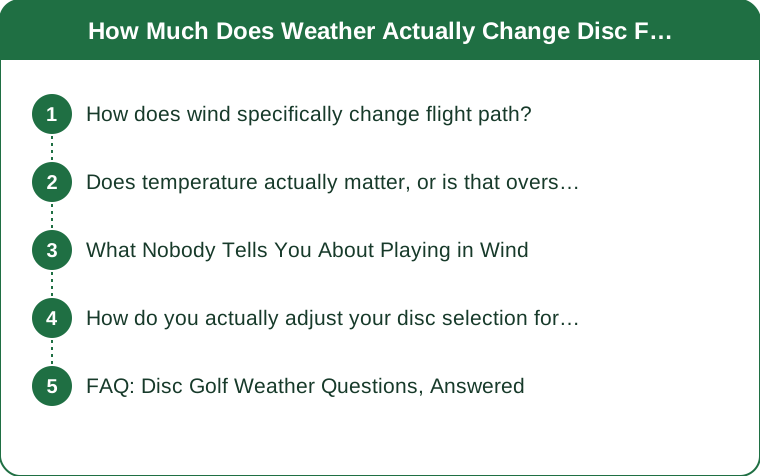
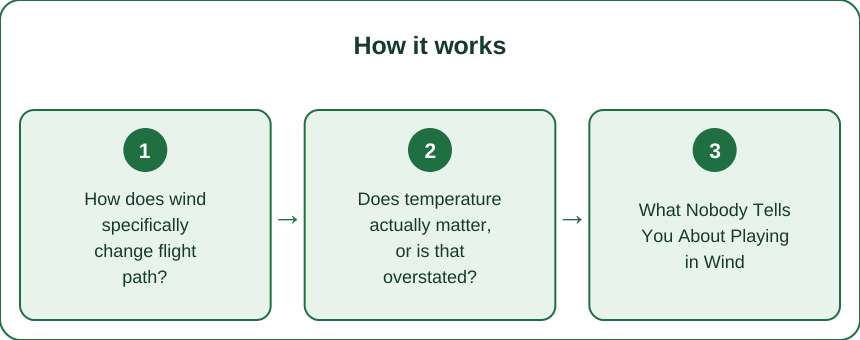
How does wind specifically change flight path?
Headwind exaggerates stability — an overstable disc fades harder and finishes shorter, while an understable disc thrown into headwind often flies straighter than usual because the wind counteracts its natural turn.
Tailwind flattens flight and reduces fade, meaning discs can turn over and go further right (for a right-hand backhand) than expected — many players lose distance control specifically in tailwind by not accounting for reduced fade.
Crosswind pushes the disc in the direction it’s already turning, so a crosswind from the same side as your natural turn amplifies it significantly, while crosswind from the opposite side can straighten the flight out.
Does temperature actually matter, or is that overstated?
It’s real, if smaller in magnitude than wind: cold plastic becomes stiffer and flies slightly more overstable, while warm plastic is more flexible and flies marginally more understable — noticeable enough that some players carry a slightly different disc bag composition between winter and summer rounds.
Humidity has a smaller, less consistently documented effect, though very humid air is sometimes described by experienced players as adding subtle drag.

What Nobody Tells You About Playing in Wind
Understable discs, not overstable ones, are often the better headwind choice — this surprises newer players, who instinctively reach for their most overstable disc in wind, when an understable disc’s natural turn getting cancelled out by headwind can produce a straighter, more predictable flight.
Also underrated: throwing with a flatter release angle in wind (rather than your normal hyzer or anhyzer angle) reduces how much the wind can grab and redirect the disc mid-flight, regardless of which disc you’re throwing.
How do you actually adjust your disc selection for conditions?
- Strong headwind: favor a more understable disc than you’d normally choose, or throw your usual disc with less power
- Strong tailwind: favor more overstable to counteract reduced fade and prevent turnover
- Crosswind matching your turn direction: go more overstable to resist the added push
- Cold rounds: expect slightly more overstable flight from your whole bag; adjust disc choice down in overstability accordingly
FAQ: Disc Golf Weather Questions, Answered
Should beginners worry about weather adjustments at all?
Basic awareness (expect more fade in headwind, less in tailwind) is worth learning early — fine-tuned disc selection by condition can come later as your bag and experience grow.
Does rain affect disc flight beyond just grip?
Wet discs can be slightly harder to control on release, but the flight physics themselves are affected more by wind and temperature than by rain directly.
How much does elevation affect disc flight?
Higher elevation (thinner air) reduces air resistance slightly, which can mean marginally longer, flatter flights — a smaller and less commonly discussed factor than wind or temperature.
TL;DR:
- Headwind exaggerates fade; tailwind flattens it and risks turnover; crosswind pushes flight sideways
- Cold plastic flies slightly more overstable; warm plastic slightly more understable
- Counterintuitively, understable discs often handle headwind better than overstable ones
- A flatter release angle reduces how much wind can redirect your disc mid-flight
Throwing your standard line regardless of conditions leaves real accuracy on the table.
Keep Reading
This article is for general informational and styling purposes only. Fit, sizing, and product availability may vary.