Why Low Autumn Sun Wrecks Your Putting Depth Perception
Quick Answer: Low sun flattens the shadows and visual cues your brain uses to judge distance, and backlighting a basket removes contrast entirely. The result is consistent misjudgment - usually short into the sun and long with it behind you. Move your stance so the sun is at an angle rather than directly ahead or behind, and use a fixed reference on the ground rather than judging distance from the basket itself.
Most players blame their putting stroke for a bad autumn evening round. The stroke is usually fine. The distance estimate going into the stroke is what changed.

How does low sun actually affect distance judgment?
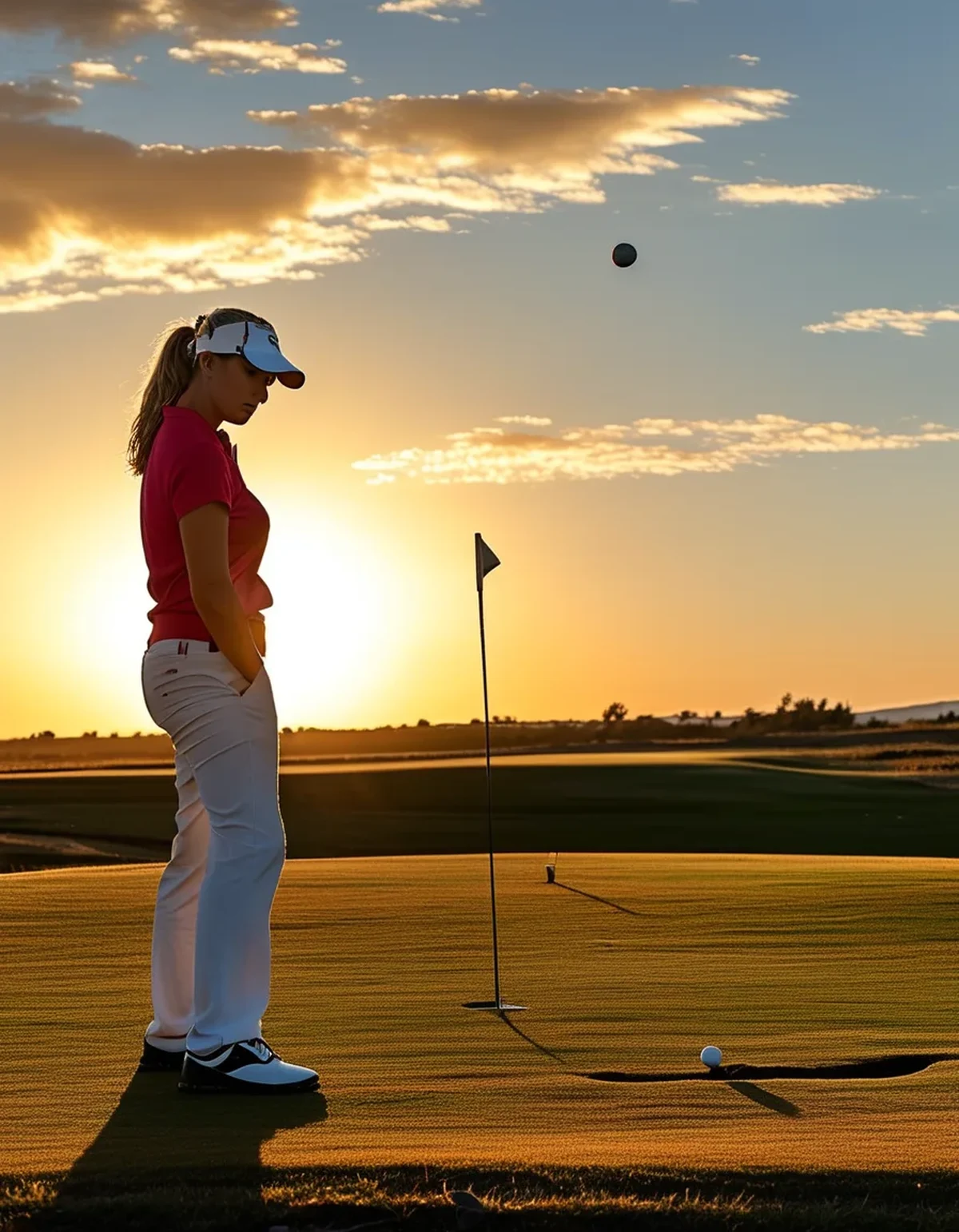
Shadows are one of the main depth cues your visual system uses, and low sun changes them dramatically. When the sun is overhead, objects cast short shadows directly beneath them and relative distances read clearly. When it is low, shadows stretch to many times the object’s height and run across the ground toward or away from you.
Long shadows create false ground texture. Your brain uses texture gradient - the way ground detail gets finer with distance - to estimate range. Long shadows lay a strong pattern over that gradient and corrupt it.
Backlighting removes contrast on the target. A basket with the sun directly behind it becomes a silhouette. You lose the chains’ detail, the depth of the cage, and the relationship between the basket and the ground behind it - all of which you were using without noticing.
Front lighting causes a different error. With the sun behind you, everything is brightly and evenly lit, shadows fall away from you, and objects tend to read as closer than they are. This is the classic long putt.
Neither error feels like a visual problem. It feels like the putt just came out wrong.
What can you actually change on the green?
Move your stance angle before you commit. You are usually allowed to take your stance anywhere behind your marker within the rules. Shifting a step to one side to take the sun off the direct line changes the lighting geometry substantially and costs nothing.
Use a ground reference instead of the basket. Pick a specific object on the ground between you and the basket - a leaf, a patch of grass, a stone - at a distance you know. Estimating in two steps is far more accurate than one long judgment into bad light.
Step off the distance on the first few holes. Three or four holes of walking your putts before you take them recalibrates your estimate for the conditions. Most players do this in wind and never think to do it in light.
Shade your eyes with a hand or a brim. A hat brim is genuinely worth carrying in autumn specifically. It restores contrast on a backlit basket immediately.
And accept the error direction. If you know you go short into the sun, add a metre to your read rather than trying to see better. Compensating for a known bias is more reliable than fixing perception.
What else changes on an autumn evening round?
Light drops faster than you expect. The window between comfortable light and genuinely hard to see is short at this time of year, and it closes faster the later in the season you go. Plan the round to finish with margin, not right at sunset.
Fallen leaves compound the problem. Leaf cover removes the texture gradient your depth perception relies on and hides disc landing spots, so both the estimate and the search get harder at once.
Cooler air stiffens plastic and reduces grip confidence. A putt that feels less secure in the hand tends to get muscled, and muscled putts go long - stacking on top of the front-lit long error.
Dew arrives earlier in the evening. By the last few holes the grass can be genuinely wet, changing both footing and how the disc behaves if it lands short.
Play the front nine at pace. The practical answer to nearly all of this is to bank holes while the light is good and treat the last few as the hardest of the round, which is exactly the opposite of how most people pace an evening.
Myth vs Fact: Light and Disc Golf
Myth: Sunglasses fix glare problems. Fact: They help with brightness and comfort, but tinted lenses reduce contrast further, which is the actual problem with a backlit basket. Amber or rose tints preserve contrast better than dark grey ones.
Myth: You just need to concentrate harder. Fact: Depth perception is largely pre-conscious. Concentration does not restore a corrupted texture gradient. Changing your stance angle does.
Myth: It only affects long putts. Fact: It affects long putts most visibly, but the same misjudgment shifts your approach shots, which is where more strokes are actually lost. If your upshots have been landing consistently short in evening rounds, this is likely why.
Myth: Experienced players are immune. Fact: Experienced players are better at knowing their bias, which is different. The perceptual effect applies to everyone.
Myth: A brighter disc solves it. Fact: A high-visibility disc helps you find it, which matters in leaf cover. It does nothing for your estimate of how far away the basket is.
FAQ: Autumn Light Disc Golf Questions, Answered
Should I just play earlier in the day?
Midday light is genuinely the easiest to judge distance in, so if your schedule allows it, yes. But low-sun rounds are also good practice - the compensation skills transfer, and playing only in ideal light means the first tournament round in bad light is a surprise.
Does this affect driving as much as putting?
Less directly, because drives are aimed at a line rather than a precise distance. Where it does bite is on approach shots inside 60 metres, which need the same distance estimate as a long putt.
Is a hat brim really that useful?
It is one of the highest-value pieces of equipment for autumn rounds and costs almost nothing. Blocking direct sun from the eye restores contrast on the target immediately, and unlike sunglasses it does not reduce contrast elsewhere.
TL;DR:
- Low sun corrupts the shadow and texture cues your brain uses for distance, and backlighting turns the basket into a silhouette.
- Into the sun you will read short; with sun behind you, long. Know the direction of your error.
- Shift your stance a step to take the sun off the direct line - it is free and it works.
- Estimate in two steps using a ground reference rather than judging the whole distance to the basket.
- Wear a brim. Sunglasses can make backlit contrast worse, not better.
The stroke that felt wrong on hole sixteen was probably fine. The number you gave it was not.
Keep Reading
This article is for general informational and styling purposes only. Fit, sizing, and product availability may vary.