The Grip Pressure Mistake That's Quietly Limiting Your Disc Golf Distance
Quick Answer: Gripping too tightly restricts wrist snap at release, which is a major contributor to disc speed and distance — a firm-but-relaxed grip that allows a fast wrist snap typically produces more distance than a white-knuckle grip ever will, regardless of arm strength.
When distance is disappointing, the instinct is usually to swing harder or add more arm strength. Grip pressure is a much more commonly overlooked factor, and it’s one of the easier things to actually fix once you know to look for it.

Why does grip pressure affect distance more than people expect?
Disc speed at release comes significantly from wrist snap — a fast, whip-like release of the wrist just before the disc leaves the hand. A tight, tense grip restricts the wrist’s ability to snap freely, acting almost like a brake on the exact motion that generates speed.
This is a similar principle to other throwing and swinging sports, where a death-grip on the implement (racket, bat, disc) reduces rather than increases the speed transferred at the point of release.
How can you tell if your grip is too tight?
A simple check: after a normal round or practice session, notice whether your forearm feels unusually fatigued or your hand feels stiff — genuine over-gripping often shows up as this kind of muscular fatigue that’s disproportionate to the actual throwing effort.
Another check: try consciously loosening your grip by roughly 20-30% on a few practice throws and see if distance changes. Many players are surprised to find equal or better distance with noticeably less grip tension once they actually test it.
What Nobody Tells You About ‘Power Grip’ Advice
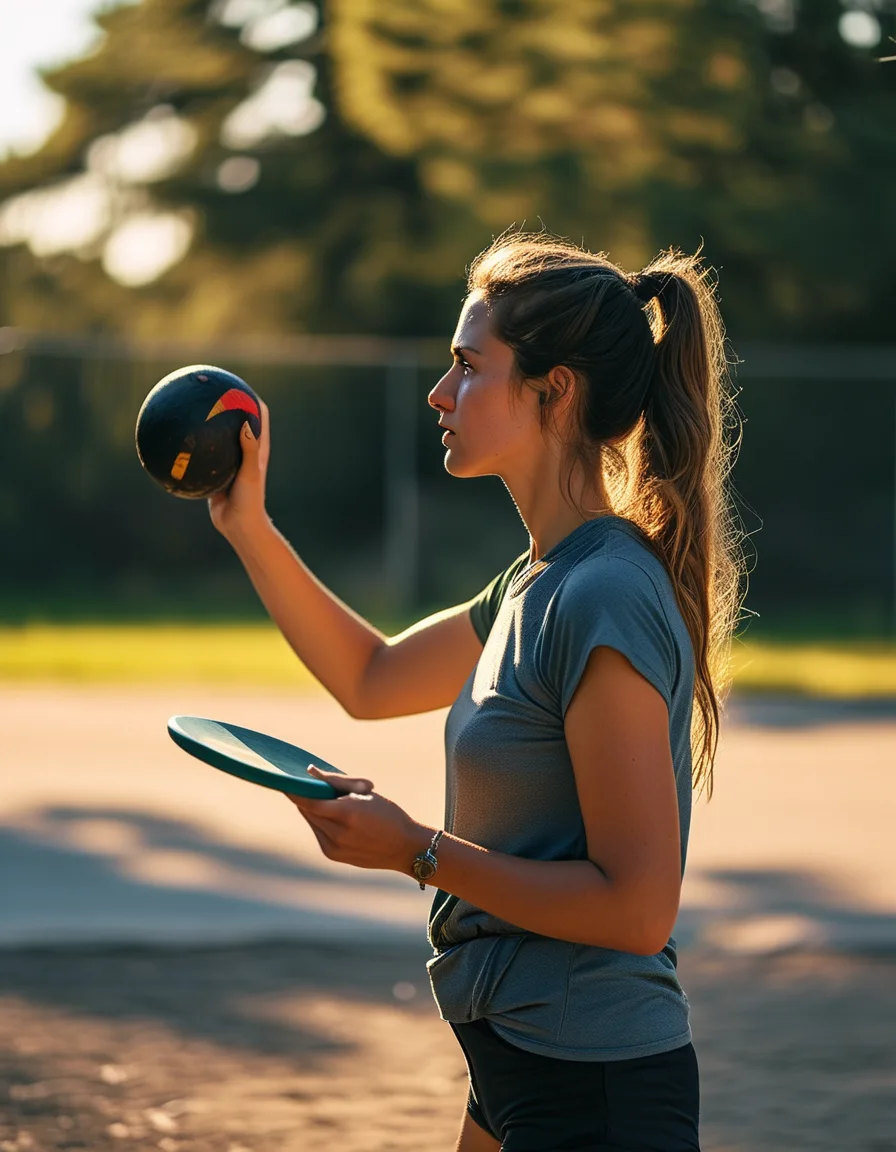
A lot of beginner advice emphasizes gripping the disc firmly to avoid it slipping mid-throw, which isn’t wrong for control, but it often gets over-applied into a full tight-fist grip that sacrifices wrist snap for a sense of security that a moderate grip provides just as well.
The disc needs to stay secure through the wind-up and pull-through, but the hand and wrist need to stay loose enough to snap freely in the final fraction of a second before release — these aren’t contradictory, but many players don’t realize both are needed at different points in the same throw.
How do you actually practice fixing this?
Start with slow-motion practice throws focusing purely on grip feel, without worrying about distance or accuracy at all — the goal is building awareness of what a ‘secure but relaxed’ grip actually feels like compared to a tense one.
Progress to normal-speed throws once the relaxed grip feels natural in slow motion, checking in periodically (every 5-10 throws) on whether tension has crept back in, since it often does unconsciously under the pressure of trying to throw far.
FAQ: Disc Golf Grip Questions, Answered
Does grip style (power grip vs. fan grip) matter as much as grip pressure?
Both matter, but pressure is the more commonly overlooked factor — players can have technically correct grip style while still over-gripping tightly enough to limit their wrist snap and distance.
Should grip pressure change for different disc types (driver vs. putter)?
Slightly firmer control is reasonable for smaller, lighter putters, but the core principle — secure but not tense, with wrist freedom preserved — applies across disc types.
How long does it typically take to unlearn an over-tight grip habit?
Some players notice a difference within a single practice session once they’re aware of it; making it a consistent habit under full-effort throwing typically takes several sessions of deliberate attention.
TL;DR:
- A too-tight grip restricts wrist snap, which is a major distance factor — arm strength isn’t the whole story
- Forearm fatigue after a round can be a sign of over-gripping
- Secure-but-relaxed beats a tight fist grip for both distance and control
- Practice grip feel in slow motion before applying it to full-speed throws
Keep Reading
This article is for general informational and styling purposes only. Fit, sizing, and product availability may vary.