Why Your Disc Golf Putts Behave Differently Depending on the Basket Type
Quick Answer: Disc golf baskets vary significantly in chain configuration (number of chains, single vs. double chain rows) and basket design, and these differences genuinely change catch forgiveness — baskets with more chains and a double-chain configuration tend to catch a wider range of putt speeds and angles than sparser single-chain models, meaning the same exact putt can be a clean catch on one basket and a frustrating rim-out or spit-out on another.
This isn’t inconsistency in your putting — it’s a real, measurable difference in equipment forgiveness between basket models and configurations used across different courses.

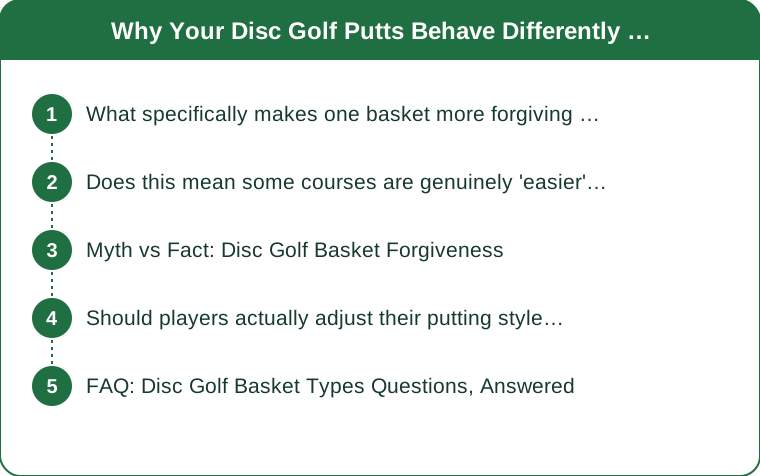
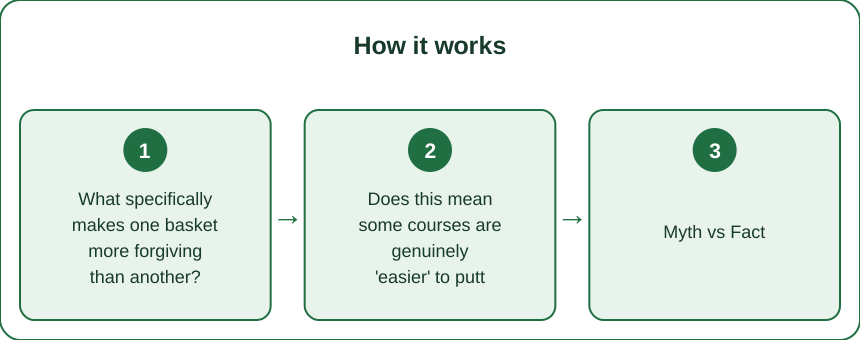
What specifically makes one basket more forgiving than another?
Chain count, chain thickness, and whether chains are arranged in a single row or a more complex double-chain configuration all affect how much a disc’s momentum gets absorbed and redirected downward into the basket rather than deflected outward — baskets with denser, double-chain configurations generally absorb more of a disc’s energy and catch a wider range of speeds and angles.
Sparser or older single-chain basket designs can let a disc pass through with less resistance, particularly on putts hit with more pace or a slightly off-angle release, leading to more rim-outs even on objectively well-thrown putts.
Does this mean some courses are genuinely ‘easier’ to putt on than others?
Yes, in a meaningful sense — courses using more forgiving, modern double-chain baskets do genuinely produce a higher make percentage for the same quality of putt compared to courses using older or more minimal single-chain designs, independent of course layout or player skill.
This is a well-recognized factor among competitive players, which is why tournament directors and course designers increasingly consider basket model consistency when discussing course difficulty and fairness, not just terrain and hole layout.

Myth vs Fact: Disc Golf Basket Forgiveness
Myth: A missed putt is always a sign of poor throwing technique. Fact: Basket forgiveness genuinely varies enough between models that identical putts can have different outcomes on different equipment.
Myth: All modern baskets are roughly equally forgiving. Fact: Even among current models, chain configuration and density create real, measurable differences in catch performance.
Myth: Basket differences only matter at a professional, high-precision level. Fact: Recreational players also experience the forgiveness difference, especially on putts with pace or a slight angle.
Should players actually adjust their putting style based on the basket type they’re facing?
Many experienced players do adjust — using a slightly softer, more controlled putting style (rather than a hard, high-pace putt) on courses known for less forgiving baskets, since a softer putt gives sparser chain configurations more opportunity to catch and settle the disc rather than deflect it.
Becoming familiar with the specific basket models used at a regular home course, and adjusting pace and angle accordingly, is a practical skill many competitive players develop specifically because of this basket-to-basket variability.
FAQ: Disc Golf Basket Types Questions, Answered
Are there specific basket brands known for being notably more or less forgiving?
There are recognized differences between models and brands among the disc golf community, though preferences and specific forgiveness rankings can vary based on personal putting style, so trying different baskets directly is the most reliable way to judge for yourself.
Does basket forgiveness matter more for certain putt distances?
The forgiveness difference tends to be more noticeable on putts with more pace (often longer putts thrown more firmly) than on very short, soft putts where most baskets catch reliably regardless of configuration.
Do tournament directors typically standardize basket types across a course for fairness?
Many competitive tournaments do aim for basket consistency across a course specifically to keep the putting challenge fair and comparable across all holes.
TL;DR:
- Chain count and configuration genuinely change how forgiving a disc golf basket is on a putt
- Double-chain, denser configurations catch a wider range of putt speeds and angles than sparser designs
- This creates real, measurable differences in make percentage between courses, not just a technique issue
- Adjusting putt pace and softness based on a course’s basket type is a practical skill many players develop
A rim-out isn’t always a putting flaw — sometimes it’s just the basket doing exactly what its chain configuration is built to do.
Keep Reading
This article is for general informational and styling purposes only. Fit, sizing, and product availability may vary.